
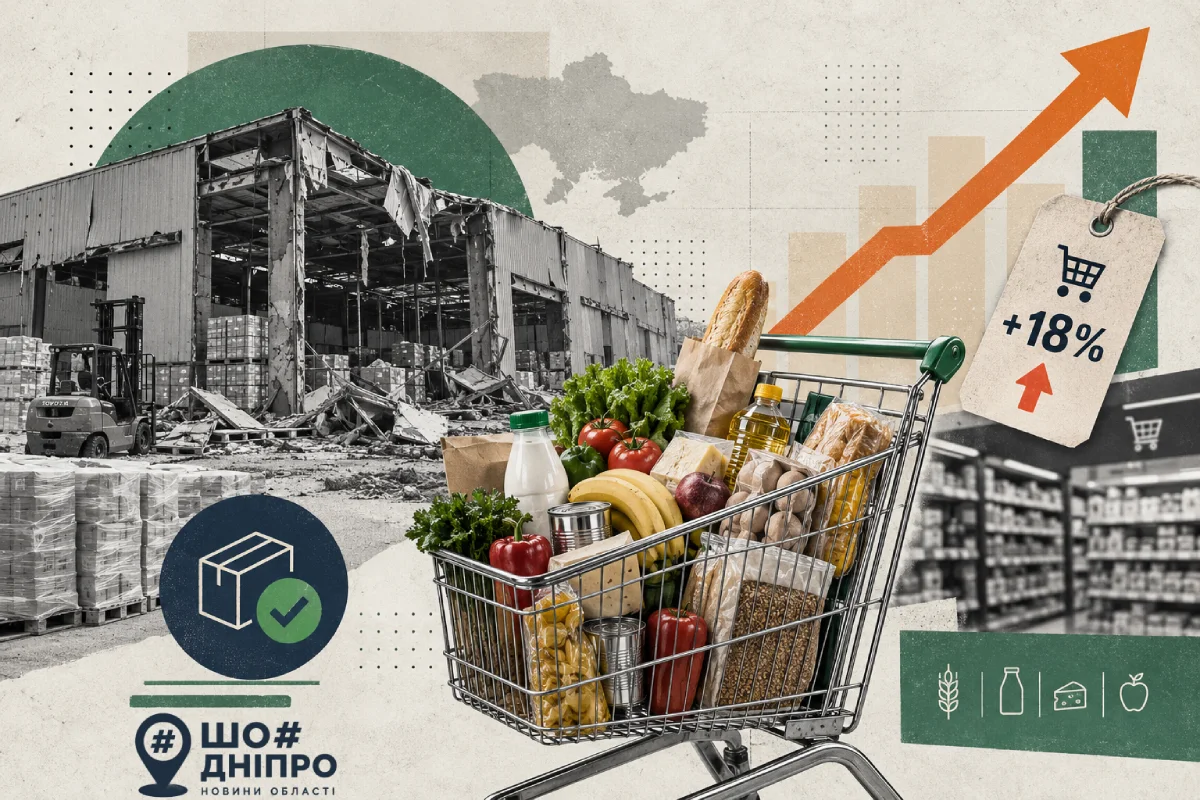
Attacks on food warehouses primarily affect goods with a limited shelf life and those requiring an uninterrupted cold chain. This was stated by Andriy Zhuk, head of the Association of Retailers of Ukraine. Taras Vysotskyi, Minister of Agrarian Policy and Food, gave a similar assessment: attacks on warehouse infrastructure do not currently create threats of a long-term food shortage.
What disappears from shelves first
Among the most vulnerable product groups to attacks, the Association of Retailers of Ukraine highlights:
dairy products
fresh meat and fish
chilled semi-finished products
fresh vegetables and fruits
A common feature of these categories is a short sales window and dependence on uninterrupted cold storage. If a warehouse is destroyed or damaged, rebuilding logistics for such goods is significantly more difficult than for products with a long shelf life.
Prices and logistics
Taras Vysotskyi warned that additional costs for rebuilding logistics chains could push average food prices up by approximately 2.5%. At the same time, the minister emphasized that there is no need to massively purchase food for several months in advance. However, he recommends having a basic food supply at home – as a general practice in wartime conditions.
Who recovers the hardest
Andriy Zhuk explained that suppliers with a single production site, one main warehouse, or a long cycle of re-import find it most difficult to adapt. If production or significant stocks of a specific brand are concentrated in one place, this particular product becomes the most vulnerable after an attack.
In contrast, where the market offers several interchangeable manufacturers, the risk of empty shelves is significantly lower: networks can quickly switch to alternative suppliers. The destruction or damage of warehouses can cause temporary delays in the supply of individual items, but not their long-term disappearance from sale.
Andriy Zhuk summarized the industry's position: attacks on enterprises, warehouses, and distribution centers can lead to a reduction in certain product items, but there are currently no grounds to speak of a shortage of entire categories of goods.