

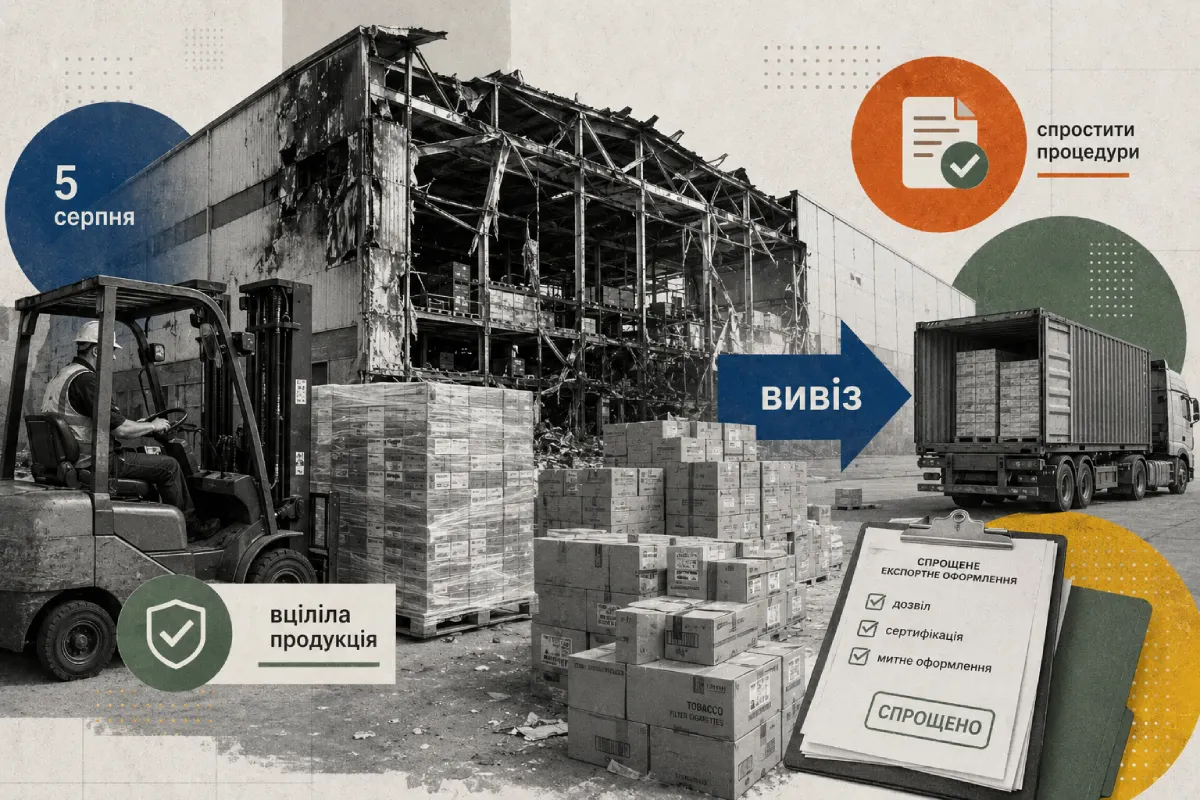
According to current legislation, tobacco product warehouses must be under continuous video surveillance by tax authorities to prevent shadow trade. If a warehouse is hit by a missile, the cameras are destroyed, and it is formally forbidden to remove surviving goods without special permission. After the August 5 strike, this very rule blocked the resumption of supplies. JTI is asking for permission to remove remnants from damaged warehouses despite the partial absence of video surveillance, as well as to adjust the excise tax on destroyed products.
That night, Russia launched 28 missiles and 115 attack drones. Among the targets were logistics centers, warehouses, and production facilities. The biggest losses were sustained by Epicentr, Rozetka, Nova Poshta, Silpo, Novus, Liqui Moly, Puma, and Intertop. Since February 24, 2022, over 1.05 million square meters of warehouse space have been damaged in Ukraine, with almost 750,000 square meters in the Kyiv region.
Due to the destruction of Fozzy Group and Novus distribution centers, tobacco products disappeared from the shelves of "Silpo" and "Fora." Manufacturers engaged distributors as a temporary measure, but direct deliveries to each individual store are not considered a full-fledged replacement for distribution centers.
JTI expects products to gradually return to shelves between August 10 and 16. Philip Morris Ukraine reported that some stores have already received goods, and options for supplying the rest are being sought. Mykhailo Mueller, Commercial Director of Philip Morris Ukraine, clarified that some stores have already received products, while others are being considered for supply through distributors.
Manufacturers are looking for alternative delivery routes but admit that full restoration of the assortment will take time.
What businesses are asking from the state
Allow the removal of goods from damaged warehouses despite the partial absence of video surveillance.
Adjust the excise tax on destroyed cigarettes.
Ensure continuity of supply in wartime conditions without additional burden on the state budget.
Tobacco companies have not announced price increases. Additional logistics costs – new transport, distributors, alternative routes - may potentially affect product cost in the future.
Source: RBC