

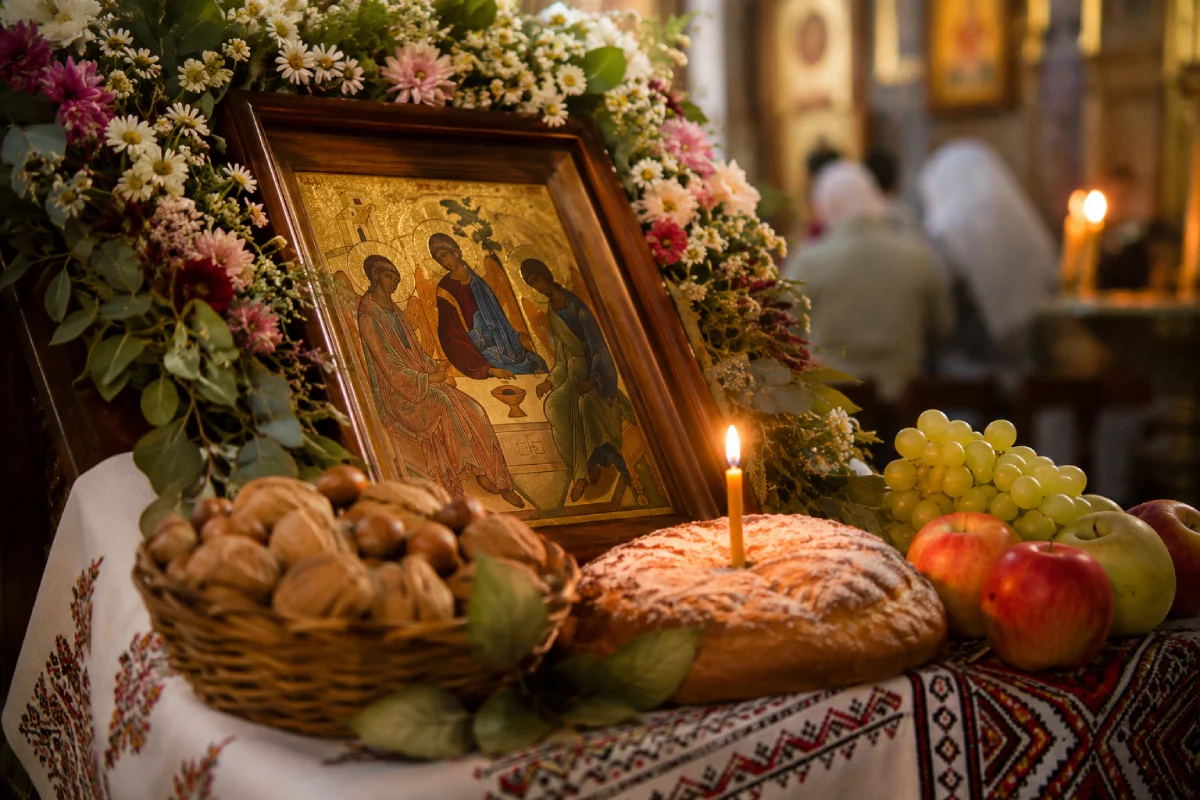
The Orthodox Church of Ukraine, which switched to the New Julian calendar, celebrates Nut Savior on August 16. Those who adhere to the Julian calendar celebrate on August 29.
Nut Savior is the third and final holiday in the series of three summer Saviors dedicated to harvesting. Before it, Honey and Apple Saviors are celebrated. In folk tradition, the holiday is known by several names: Bread, Third, Linen, and Savior on Linen. The first two reflect the ripening time of nuts and wheat, while "Linen" and "Savior on Linen" originate from the legend of the image of Jesus reflected on cloth.
This year, the holiday fell on a Sunday. Believers attend church services and bring baskets of food to the temple: bread, buns and other pastries, fruits, vegetables, nuts, and ears of grain. According to popular belief, consecrated food promotes health and helps in the fight against diseases.
In addition to food, fabrics are consecrated on Nut Savior - primarily embroidered towels. Such linen is preserved and used during weddings, baptisms, and childbirth.
Since the Dormition Fast has already ended, the festive table may include meat dishes. Traditionally, bread, nuts, and apple pies occupy a central place on it. According to folk custom, the more generous the table, the greater the prosperity in the family; it is customary to treat both relatives and less fortunate people.
Omens and Prohibitions
There is a good luck omen: to find a walnut with two fused fruits and carry it in your pocket as an amulet. Folk omens also outline what should be avoided on this day:
quarreling and offending loved ones;
refusing those who ask for help;
complaining about difficulties;
being lazy.
The church basis of the holiday is the transfer of the Image of Edessa of Jesus Christ from the city of Edessa to Constantinople. According to the New Testament tradition, King Abgar, ruler of the Syrian state of Osroene with its capital in Edessa, fell seriously ill and sent an artist to Jesus with a request to paint His portrait. The artist failed – the image of Christ changed before his eyes. Then Jesus washed and wiped His face with a cloth; His image was miraculously reflected on it. The cloth was delivered to the king, and he recovered.
The image was named "Savior Not Made by Hands" - as it appeared without the participation of an artist. It is considered the first icon in the history of Christianity. In 944, by order of the Byzantine ruler, the relic was transported to Constantinople, but after the sacking of the city in the 13th century, it disappeared without a trace.