

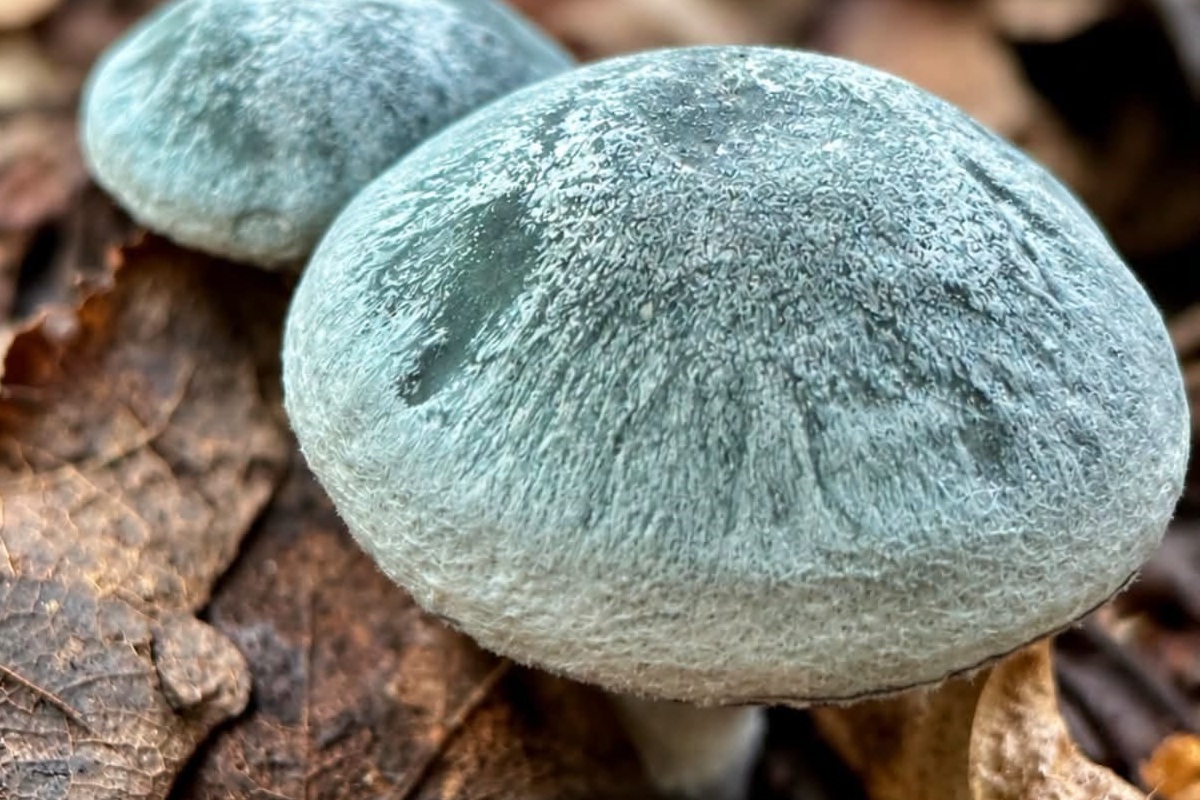
Among the fallen leaves and pine needles in local forests, one can stumble upon a true rarity - the aniseed funnel, or Clitocybe odora. This mushroom is immediately recognizable by its velvety-turquoise cap and dense, sweetish scent, reminiscent of licorice candies. Characteristically, mushroom pickers usually first catch the aroma in the air - and only then notice the fruiting bodies themselves in the litter. The mushroom grows both singly and in small groups directly on the soil or among leaf litter. According to mycological reference books, it belongs to conditionally edible species.
Where and when to look for it in Dnipropetrovsk region
In general, Clitocybe odora is widespread throughout Ukraine - in coniferous (primarily spruce), deciduous, and mixed forests. However, in the Dnipropetrovsk region, it is found noticeably less frequently than in Polissia or Carpathian massifs. The greatest chances of finding it are in artificial coniferous plantations and natural forests along riverbeds: in the forests of the Samara thicket, near the Samara Pine Forest, and also in the forest lands near Orikhil and Vovcha.
In the Dnipropetrovsk region, the collection season mainly falls from late August to October: that's when the summer heat subsides and the soil receives enough moisture. The general fruiting season for the species is from early July to late October or early November, with peak activity in September and October.
Practical tips for mushroom pickers
Only those who know mushrooms well should collect aniseed funnel: the species is easily confused with pale or poisonous relatives from the Clitocybe genus.
Due to its intense aniseed scent, the mushroom is rarely used as a main ingredient - more often it is added in small quantities as an aromatic seasoning to dishes.
Frying and drying are not suitable for this species - the strong aroma becomes too dominant.
In the Dnipropetrovsk region, the cap can quickly lose its characteristic turquoise color: the arid climate of the region accelerates fading, and the mushroom acquires a yellowish or grayish tint - unlike in humid Polissia forests, where it retains its rich color for a long time.
The bluish-green pigment that gives the mushroom its recognizable appearance also plays a biological role: it protects against ultraviolet light and helps retain moisture during temperature fluctuations. That is why in the steppe climate of the Dnipropetrovsk region, the mushroom looks different from in more humid regions of the country.
Read also: